GUIDE
Apostille & legalisation, explained plainly
Two words that show up on official paperwork and almost never get explained. Here's what they mean, when you need them, and in what order.
What "apostille" actually means
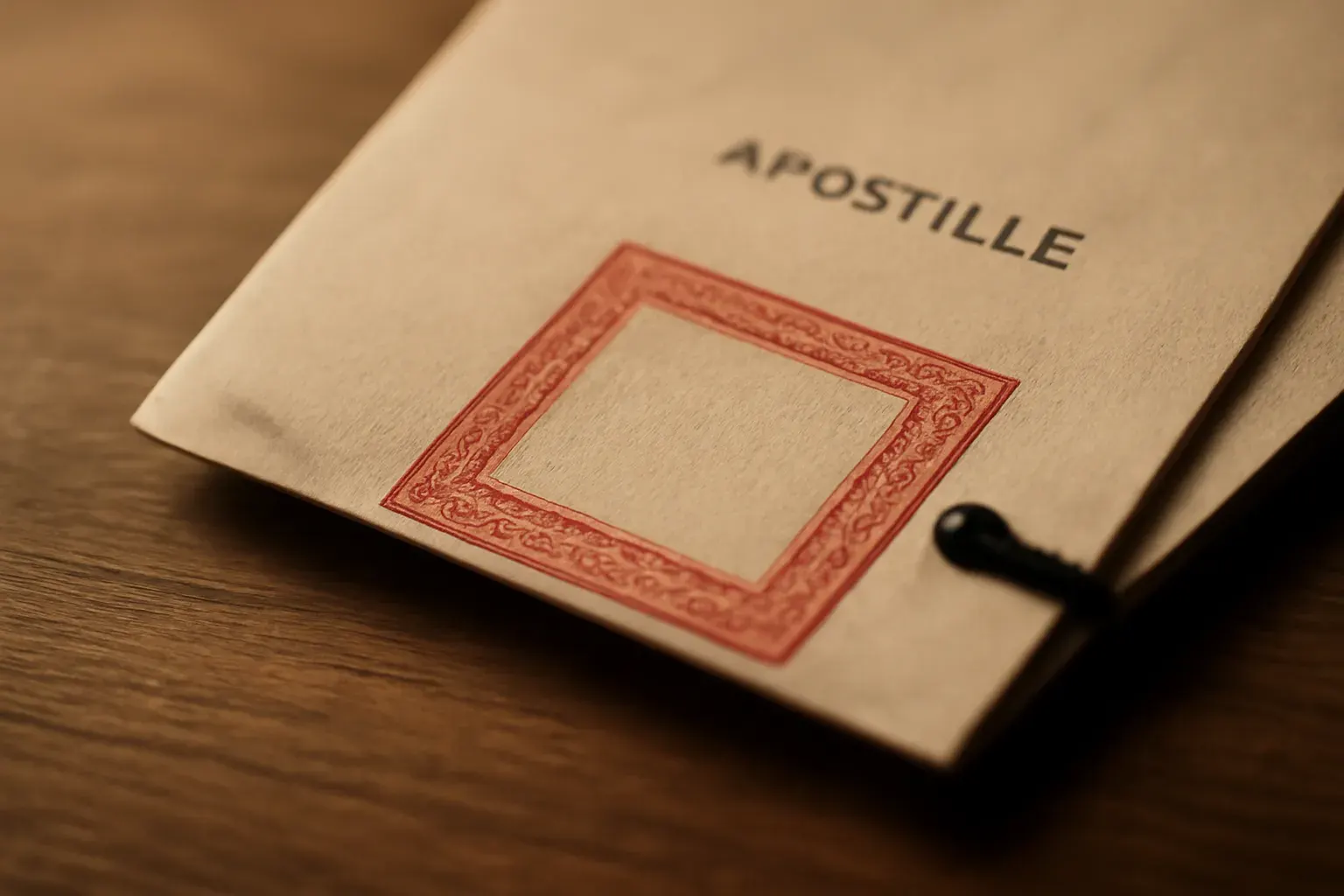
An apostille is a standardised certificate, recognised by the ~120 countries that are party to the 1961 Hague Convention, that authenticates the origin of a public document — it confirms the signature, seal or stamp on the document is genuine, not that its contents are true. It replaces the older, slower chain of consular legalisation between countries that both belong to the Convention.
What "legalisation" means, and how it differs
Legalisation is the older, non-Hague route: a chain of certifications (often through the issuing country's foreign ministry, then the receiving country's embassy or consulate) that authenticates a document for use in a country that is not party to the Hague Convention. If both the issuing and receiving countries are Hague members, an apostille replaces this entire chain with a single certificate.
Which documents typically need one
Birth, marriage and death certificates; criminal record checks; academic degrees and transcripts; powers of attorney and notarial deeds; and company registry documents are the ones we see most often needing an apostille or legalisation before they can be used abroad. Whether yours does depends on the destination country and what it's being used for — the receiving institution's letter or checklist is the definitive source, not a general rule.
Where to get an apostille in Spain
In Spain, apostilles are issued depending on the type of document: judicial documents go through the Colegios de Abogados or the corresponding court, notarial and civil registry documents typically go through the Ministerio de Justicia, and some can now be requested online. The exact office depends on which authority originally issued your document — if you'd rather not navigate this yourself, our apostille handling assistance add-on (€55 agency fee, official fees not included) manages the request on your behalf.
Apostille or legalisation, then translation — which order?
In most cases, the apostille or legalisation is applied to the original document first, and the sworn translation is then produced from that already-apostilled document — often including a translation of the apostille certificate itself, since it will otherwise be in the issuing country's language. Some institutions accept the apostille applied afterward, to the translation; this is the exception, not the rule, so check the receiving institution's requirement before ordering. Tell us your situation when you order the sworn translation and we'll confirm the right sequence.
Sworn translation and the apostille — how they work together
These are two separate authentications doing two different jobs: the apostille confirms the original document is genuine; the sworn translation, produced and stamped by a MAEC-appointed translator, renders it into another language with legal validity. A document can need one, the other, or both, depending on where it's going. See our Sworn / Certified Translation page for the full service detail.
How to verify a sworn translator's listing
Spain's Ministry of Foreign Affairs, EU and Cooperation (MAEC) publishes a public, searchable list of appointed Traductores-Intérpretes Jurados on its official website, by name and language pair. Anyone can check it — it's the one genuine way to confirm a specific translator's appointment, rather than taking an agency's word for it. We coordinate the assignment of your sworn translation to a linguist working to these conventions; we encourage you to check the register yourself if you'd like to confirm the appointment directly.
FAQ
Frequently asked questions
Does gotranslate24 apply the apostille itself?
The apostille itself is issued by the relevant Spanish authority (courts, Ministerio de Justicia, or the issuing country's equivalent for foreign documents) — not by a translation agency. Our apostille handling assistance add-on manages that request on your behalf; the €55 is our agency fee, and any official government fee is separate and not included.
How long does getting an apostille take?
It depends on the issuing authority and document type — some Spanish offices now process requests online in days, others take longer. Tell us your document and destination and we'll give you a realistic estimate before you order the apostille handling assistance.
My destination country isn't in the Hague Convention — what do I need?
You'll need legalisation instead of an apostille — the longer chain described above, usually via the relevant foreign ministry and the destination country's consulate. Tell us the country and document and we'll confirm the exact steps.